How are speeches selected and edited?
- Quotes and speeches are selected on the basis of their relevance and notability - whether they bring new information to a debate, are rhetorically interesting, or whether they are interesting in the context of their speaker.
- Omissions to speeches are noted by ellipses (...) but are otherwise as recorded in Hansard.
- Not all speeches are selected here.
- AI is used to draft articles summarising Parliamentary debates. All summaries are reviewed and edited manually before publication. You can read the script used to generate the summaries.
Illicit High Street Shops
Edited by Peter Warrington, 2026-06-19 Speeches from a Westminster Hall debate tackling the rise of illicit shops, money laundering, and organised crime on British high streets.MPs have warned that cash-only mini-marts, vape shops, and barbers are being used as fronts for serious organised crime, money laundering, and exploitation, calling for urgent powers to shut down “dodgy shops” permanently.
Key Quotes:
“The message I take away from it is, ‘You’ve done some stuff that we think is good, but we need to do a lot more.’ This issue is undoubtedly one that we will all be judged on when we next stand before the electorate.” - Sarah Jones (Labour)
“For far too many people and in far too many places, the high street has become a visible sign of where the British state has lost control. People suspect that the cash-only takeaways, barber’s shops and vape shops that they see springing up on their high streets are symptomatic of a deeper rot.” - Katie Lam (Conservative)
“But the truth is that, as the challenges to retail have increased, old established shops are closing and new shops are popping up in their place: vape shops, mini-markets and barbers. Although the majority of those shops are perfectly legitimate, there is increasing evidence that what the public suspect is true: many are involved in money laundering, counterfeit goods and other criminality.” - Alex Ballinger (Labour)
“Indeed, one such shop, on Grays High Street in my local town, now does not even bother to remove the merchandise or move it around; it just sticks a Sharpie-written sign up on the door every six months saying that it is under new management, which is absolutely appalling.” - Jen Craft (Labour)
“An increasing number of builders are being employed by these shop owners to build hidden cupboards so that people can hide their illegal activities. Also, there were lots of cameras in the back of the shop, but they were not there to protect the shop itself; they were to keep an eye on the people working there—these are nasty criminal gangs that want to ensure that the people they employ are not stealing from them.” - Sarah Jones (Labour)
“My constituents are angry that where once there was an active high street with household names, there now stand illegal vape shops, mini-marts and a suspicious number of barbers.” - Justin Madders (Labour)
“There is also a big issue in my local shops of drug paraphernalia being sold next to sweets, and of drugs in resealable bags designed to look exactly like sweet wrappers.” - Paul Waugh (Labour)
“Across Worksop, Retford and Harworth, there has been a surge in vape shops, barber shops and mini-marts. They are clustered close together and often have barely any customers. Local people are asking a very simple question: how do such businesses survive?” - Jo White (Labour)
“Landlords who repeatedly offend should lose their premises for at least two years; the premises should be handed over to the local council to be let out at reduced rents to genuine local businesses that play by the rules.” - Gideon Amos (Liberal Democrat)
“[On shops wrapping their windows] Why are they wrapping the windows? The first question must be: what are they trying to hide? We want our town centres to be welcoming, warm and open.” - Alex Ballinger (Labour)
High Street Shops: Illicit Activity (Westminster Hall) — June 17th 2026
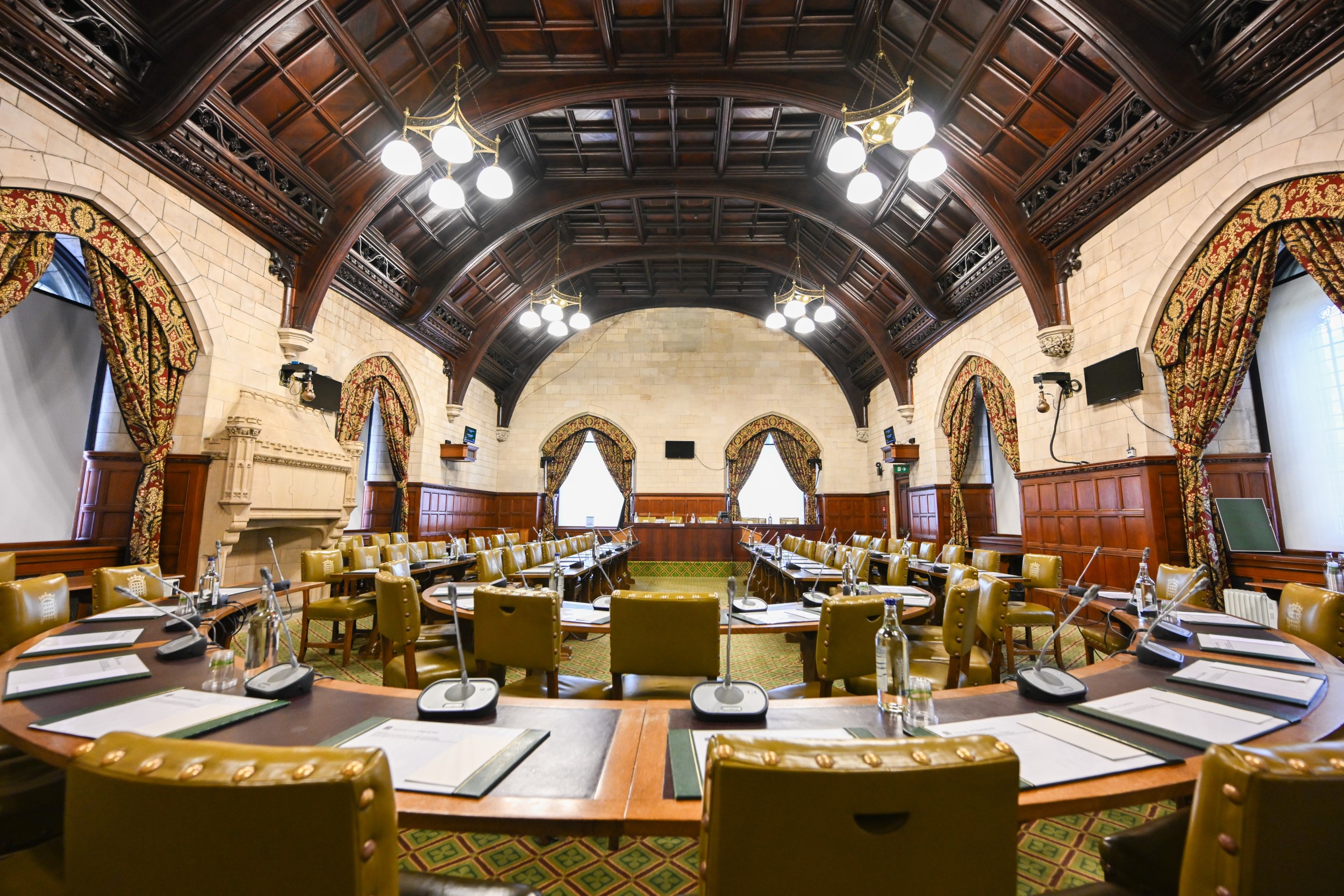
Image: UK Parliament / Jessica Taylor
Westminster Hall debates are held in Westminster Hall (shown above) rather than the Chamber of the House of Commons. This Westminster Hall debate was secured and opened by Alex Ballinger (Labour), who highlighted the growing national blight of “phoenix” shops and illicit store fronts undermining communities:
I beg to move, That this House has considered the matter of tackling illicit activity in high street shops.
…
But the truth is that, as the challenges to retail have increased, old established shops are closing and new shops are popping up in their place: vape shops, mini-markets and barbers. Although the majority of those shops are perfectly legitimate, there is increasing evidence that what the public suspect is true: many are involved in money laundering, counterfeit goods and other criminality.
During his opening remarks, Paul Waugh (Labour) intervened to raise the alarm on child exploitation and the insidious nature of the packaging used by these illicit operations:
My hon. Friend is right that dodgy shops and mini-marts are often a front for organised crime, particularly drug dealing, but also for the sexual and criminal exploitation of children, which we sadly know all too much about in Rochdale. … There is also a big issue in my local shops of drug paraphernalia being sold next to sweets, and of drugs in resealable bags designed to look exactly like sweet wrappers. Does he agree that the Government should look at the Misuse of Drugs Act 1971 so that trading standards can intervene on this?
Alex Ballinger (Labour) agreed, pointing to the visual cues of suspicious shops and calling for a restoration of the high street:
… Why are they wrapping the windows? The first question must be: what are they trying to hide? We want our town centres to be welcoming, warm and open. … We need to get our high streets back to being the law-abiding, beating heart of our towns that we all want to see.
Justin Madders (Labour) spoke next, emphasizing how local pride is damaged when established high streets are overtaken by suspicious, low-footfall businesses:
My constituents are angry that where once there was an active high street with household names, there now stand illegal vape shops, mini-marts and a suspicious number of barbers. They know that something is not right, particularly when legitimate businesses have already vacated the area due to reduced footfall.
…
It is clear that the tools we have are not fit for purpose. Councils should have the power to close premises permanently without having to go to court, and landlords should not get off the hook if their property is used for illegal purposes.
Jo White (Labour), a member of the Home Affairs Committee, shared findings from her own constituency inquiry in Bassetlaw and questioned the economic viability of these operations:
Across Worksop, Retford and Harworth, there has been a surge in vape shops, barber shops and mini-marts. They are clustered close together and often have barely any customers. Local people are asking a very simple question: how do such businesses survive?
…
I strongly believe that such businesses are money-laundering fronts. There needs to be close police scrutiny of them, and greater partnership with other authorities to monitor those shops and shut them down as quickly as possible.
Jen Craft (Labour) drew attention to “phoenix shops” that constantly evade tax and local regulations by repeatedly pretending to change ownership:
Indeed, one such shop, on Grays High Street in my local town, now does not even bother to remove the merchandise or move it around; it just sticks a Sharpie-written sign up on the door every six months saying that it is under new management, which is absolutely appalling.
…
We know where the issues lie: spending on trading standards has been reduced by around 50% over the last decade.
…
If we end criminality and illegality, what do we want our high streets to look like? … Let us reclaim our high streets and regenerate them once and for all.
Speaking for the Liberal Democrats, Gideon Amos demanded tougher penalties for complicit landlords who turn a blind eye to illegal activity on their properties:
High streets are the heart of our communities, and we cannot allow them to become sites of decline.
…
Landlords who repeatedly offend should lose their premises for at least two years; the premises should be handed over to the local council to be let out at reduced rents to genuine local businesses that play by the rules.
…
These criminal gangs must be given no quarter in Taunton and Wellington or any other town centre in the country.
The Shadow Minister, Katie Lam (Conservative), responded for the Opposition, tracing the financial networks of serious organised crime and highlighting links to illegal immigration and modern slavery:
For far too many people and in far too many places, the high street has become a visible sign of where the British state has lost control. People suspect that the cash-only takeaways, barber’s shops and vape shops that they see springing up on their high streets are symptomatic of a deeper rot.
…
All too often, such high street shops are linked to organised crime, including through the sale of illicit or counterfeit goods, money laundering, immigration crime and people smuggling.
Sarah Jones (Labour), Minister for Policing and Crime, closed the debate by outlining the Government’s new multi-agency strategy, admitting that while progress is being made, more work is needed to reclaim town centres:
The message I take away from it is, ‘You’ve done some stuff that we think is good, but we need to do a lot more.’ This issue is undoubtedly one that we will all be judged on when we next stand before the electorate.
…
The Government are very aware that we have to understand and appreciate the fact that the town centre of the future will be different, and we need to change laws and do what we can to encourage a new high street. A wider high street strategy is being pulled together at the moment; every Government Department that could possibly be relevant is coming together and asking, “What more can we do to ensure that our high streets can thrive for the businesses we want to see on them, rather than this illicit activity?”
The activity itself has been very well described, and my hon. Friends the Members for Leigh and Atherton (Jo Platt) and for Great Grimsby and Cleethorpes (Melanie Onn) showed leadership in painting us a very good picture of the problems we see nationally. We know there is this increase in shops—I see it on my high street, as everybody does—but people are not in them, so how are they making money? What is going on in that space?
…
An increasing number of builders are being employed by these shop owners to build hidden cupboards so that people can hide their illegal activities. Also, there were lots of cameras in the back of the shop, but they were not there to protect the shop itself; they were to keep an eye on the people working there—these are nasty criminal gangs that want to ensure that the people they employ are not stealing from them.
…
There will be big national pushes under Operation Machinize. For obvious reasons, I cannot say when they will be, but Operation Machinize has worked effectively; when all the agencies work together, there is a much more effective outcome. All Members made useful suggestions: more support for trading standards; looking at licensing and more powers for local authorities; data sharing—that is an important suggestion, which I certainly agree with—a place for direct reporting into trading standards, which is an interesting one; and more powers to tackle landlords as well as the organised crime.
…
I thank everybody again. I very much get the message that we have started a good piece of work, but there is a lot more to do.